Boom truck rentalin Brownsville, TX
A boom truck is a crane built onto a truck chassis. It drives to the job, sets its outriggers and places loads at height. Send the load and the site; local operators quote you directly.
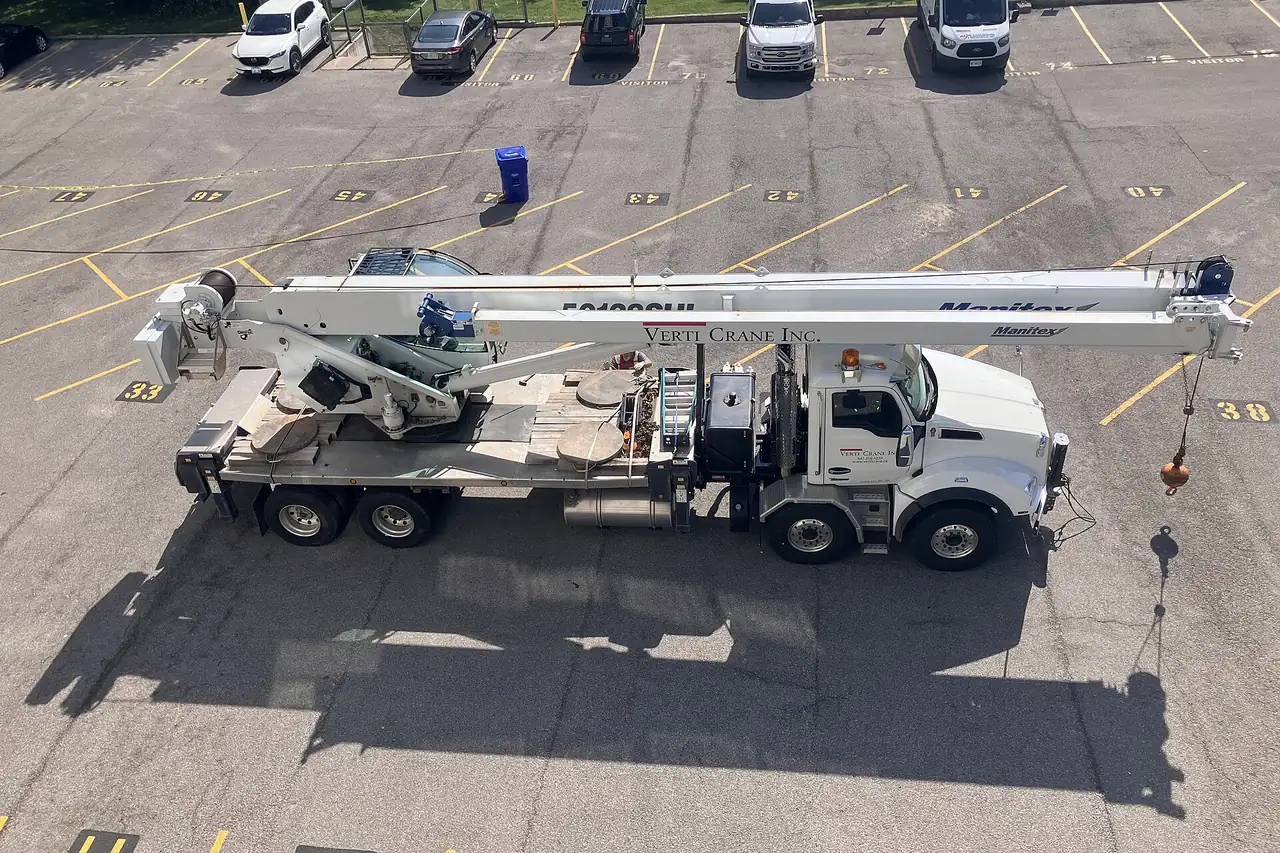
What a boom truck is
If the load is heavy, far out or very high, a mobile crane is the better call. The operator will tell you which.
- A crane on a truck
- The boom is mounted on the truck itself, so one vehicle drives to the site and sets up on outriggers. It is smaller than a mobile crane and simpler to position, which suits short, repeat picks.
- Telescopic or knuckle boom
- A telescopic boom extends in straight sections. A knuckle (articulating) boom folds at joints and can reach over and down. The operator picks by what is being placed and where.
- Usually booked with the operator
- Most boom truck work is an operated lift: truck, operator and, if needed, a rigger. If you have your own certified operator, ask for a bare rental. OSHA expects crane operators on construction work to be trained, certified or licensed (29 CFR 1926.1427).
- Capacity falls as the boom goes out
- Every boom truck has a load chart. What it can lift drops with the distance out and the height, so weight alone doesn't size the pick. That's why the request asks for weight, height and distance together.
Jobs a boom truck handles
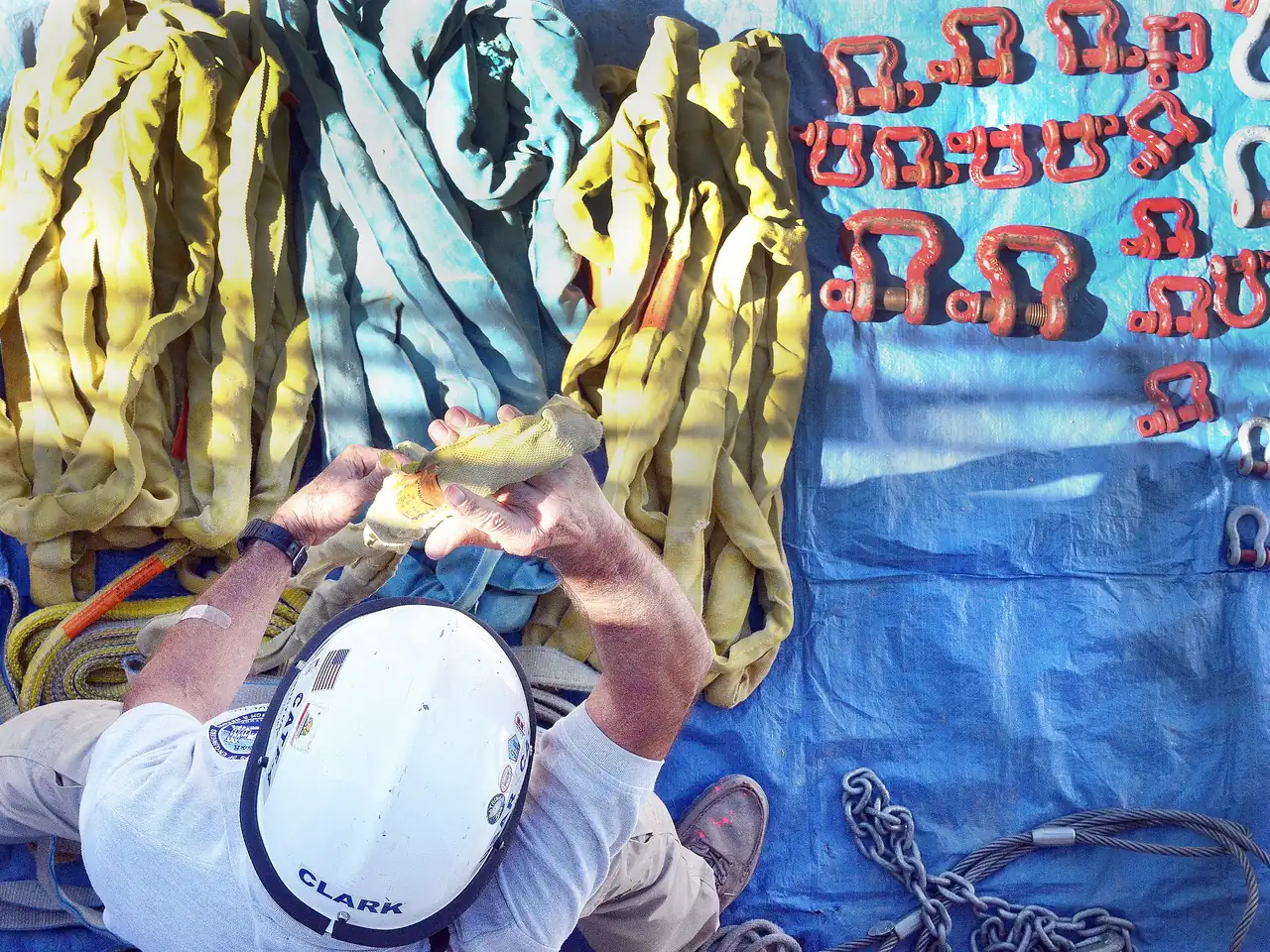
Rooftop HVAC units
Packaged units, condensers and curbs onto flat roofs. Send the unit weight from its spec sheet and the roof height.
Roofing materials
Pallets of shingles, tile or insulation lifted to the roof on houses and small commercial buildings where a larger crane won't fit.
Signs and light poles
Setting or replacing sign cabinets and poles, usually a short pick near a street or parking lot.
Small steel and trusses
Light steel, joists and trusses on small builds, set by a boom truck and a small crew.
Equipment and pallets
Compressors, pumps and generators onto pads, docks or mezzanines.
Property maintenance
Replacing rooftop equipment for building owners and managers, often one unit at a time.
Power lines come first
A boom truck works close to buildings, and buildings have service lines. Federal crane rules for construction are in OSHA's 29 CFR 1926 Subpart CC. This is general guidance, not legal advice; the operator and your site safety lead decide how the lift runs.
- Check before the lift
- Before work starts, the work zone is identified and checked for whether any part of the crane, line or load could come within 20 feet of a power line at full working radius (29 CFR 1926.1408). If it could, more precautions apply.
- Clearances grow with voltage
- OSHA's Table A sets minimum clearances: 10 feet for lines up to 50 kV, 15 feet over 50 and up to 200 kV, 20 feet over 200 and up to 350 kV. You can't tell a line's voltage by looking at it.
- Signal person
- A signal person is required when the point of operation isn't in the operator's full view, when the operator's view in the direction of travel is blocked, or when the operator or the person handling the load decides site conditions call for one (29 CFR 1926.1419).
- The ground
- Outriggers put the truck's weight onto small pads. The operator decides whether the ground will carry them or needs mats.
What to have ready
- Unit or load weight from the nameplate or spec sheet.
- Height of the set point: roof height, parapet and any curb.
- Where the truck can park and how far that is from the set point. Distance out matters as much as weight.
- Overhead lines, trees or awnings between the truck and the roof.
- The ground under the outriggers: paved, caliche, dirt or a sloped drive.
- Access: gate width, low entrances and when trucks can get in.
- Date and a site contact who will be there.
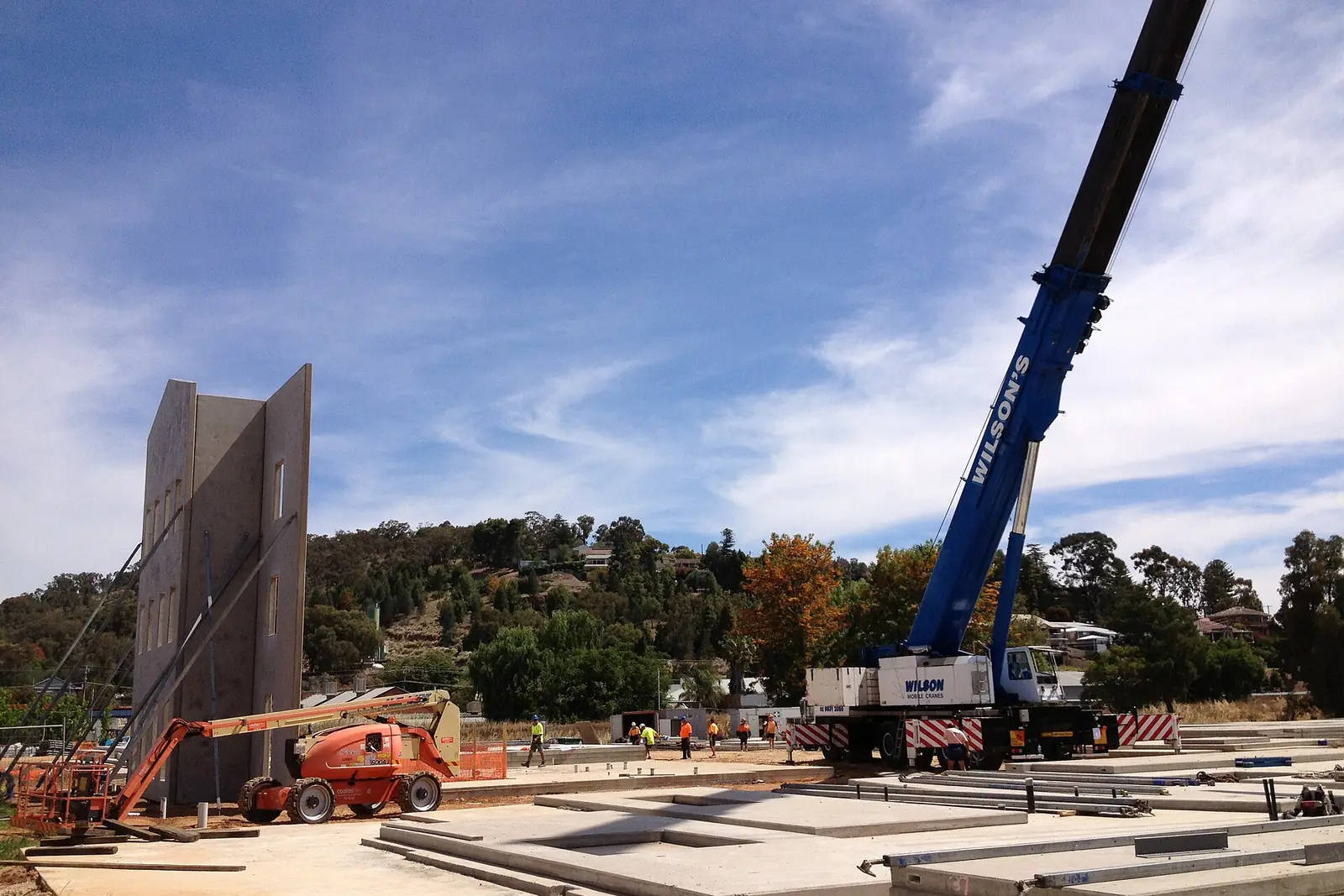
Sketch your lift
Set the weight, the height and the distance from the crane roughly, then add them to your request in one tap.
A load of about 6,000 lb, set 40 ft up and 30 ft out from the crane.
This is a sketch, not a load chart. The operator sizes the crane from your numbers, the rigging and the ground it sets up on.
Boom truck questions
What is the difference between a boom truck and a mobile crane? A boom truck is a crane mounted on a truck bed: smaller, simpler to position, and suited to lighter picks. A mobile crane is a larger hydraulic crane for heavier loads, longer reach and greater height.
When should I ask for a mobile crane instead? When the load is heavy for its distance out, or the set point is high or far from where a truck can park. If you aren't sure, send the numbers and the operator will say which crane fits.
Does a boom truck come with an operator? Usually. Confirm it in the quote, along with whether a rigger or signal person is included. If you have a certified operator of your own, ask about a bare rental.
Can a boom truck lift a rooftop unit? Often, depending on the unit's weight and how far out the truck has to reach. Send the weight from the spec sheet, the roof height and where the truck can park; the operator checks them against the load chart.
Do you serve Harlingen and Port Isabel? Requests from Harlingen, Port Isabel and across the Valley are welcome. Operators quote travel with the job. See service areas.
What if there are power lines near the roof? Say so in the request; the form asks. Operators plan around lines, and some lifts can't be done safely where lines are in the way.
Related crane services
Ask for a boom truck
"Boom truck" is already selected. Add the load, the roof or set height and the date.
We pass your request to independent local operators who quote you directly.