Crawler crane rentalin Brownsville, TX
A crawler crane stands on tracks instead of tires, which suits heavy picks and long jobs. Send the load, the reach and the ground; local operators say whether a crawler is the right crane and quote it.
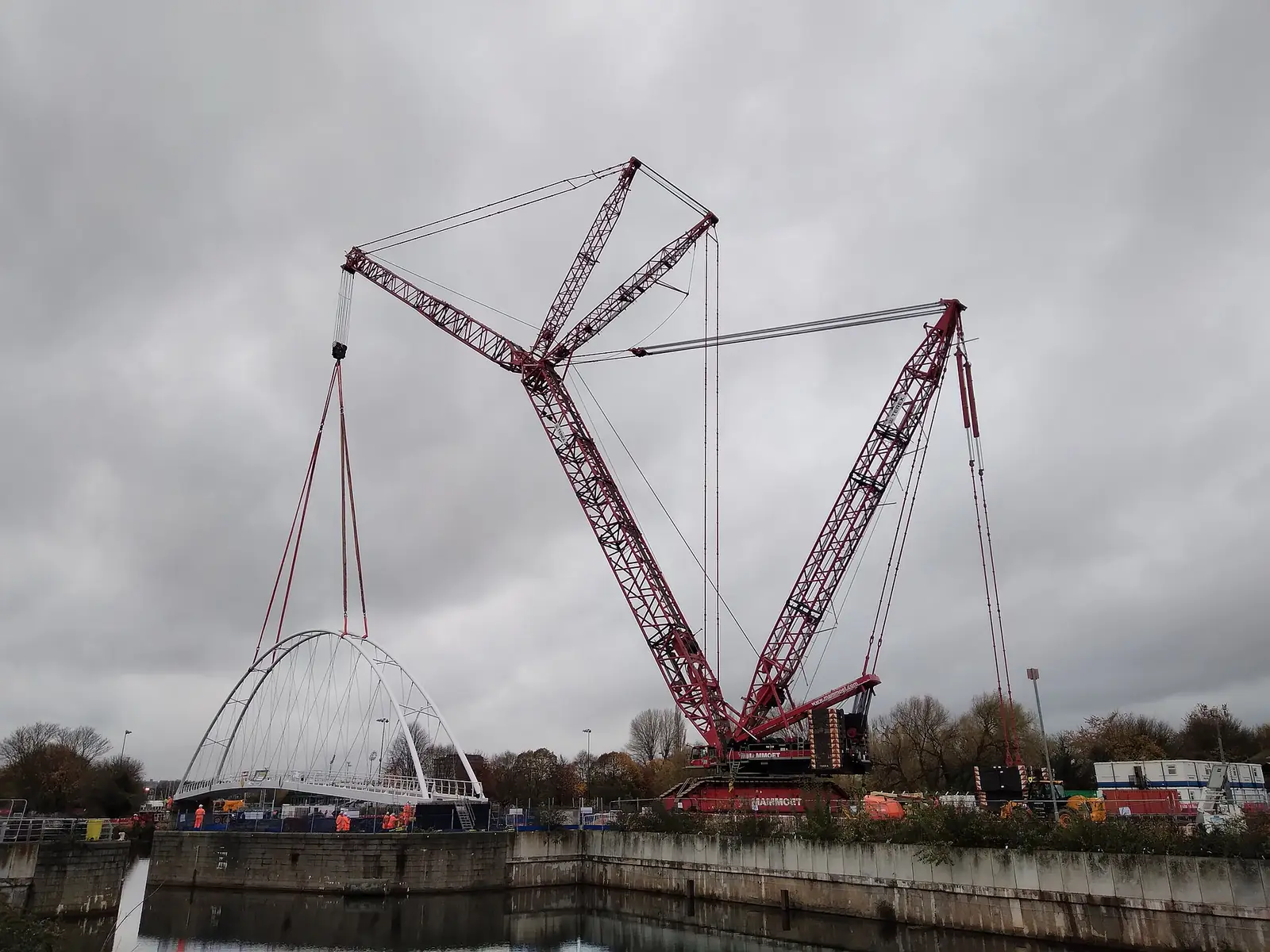
What sets a crawler crane apart
Heavier does not always mean crawler. Ask what the load and the site actually need.
- Tracks spread the weight
- The tracks put the crane's weight over a large area, which helps on ground that wouldn't carry a wheeled crane. The ground still has to be prepared; large cranes often work on mats.
- A boom built for the job
- Many crawlers use a lattice boom that is assembled on site, so the crane is configured for the reach and capacity the lift needs.
- Moves around the site
- A crawler can reposition on its tracks. Whether it may travel with a load is a decision for the operator and the lift plan.
- Arrival takes planning
- Larger crawlers are usually hauled in several loads and assembled on site, which takes trucks, a crew and time. Send your dates early.
- When an all-terrain is enough
- A smaller pick on firm ground may not need a crawler. An all-terrain or rough-terrain crane can arrive faster. Describe the job and operators will say.
Jobs that call for a crawler
Heavy equipment sets
Vessels, exchangers, skids and large machinery at plants and yards.
Long-duration jobs
Weeks of picks on one site, where the crane stays set up.
Marine and bridge work
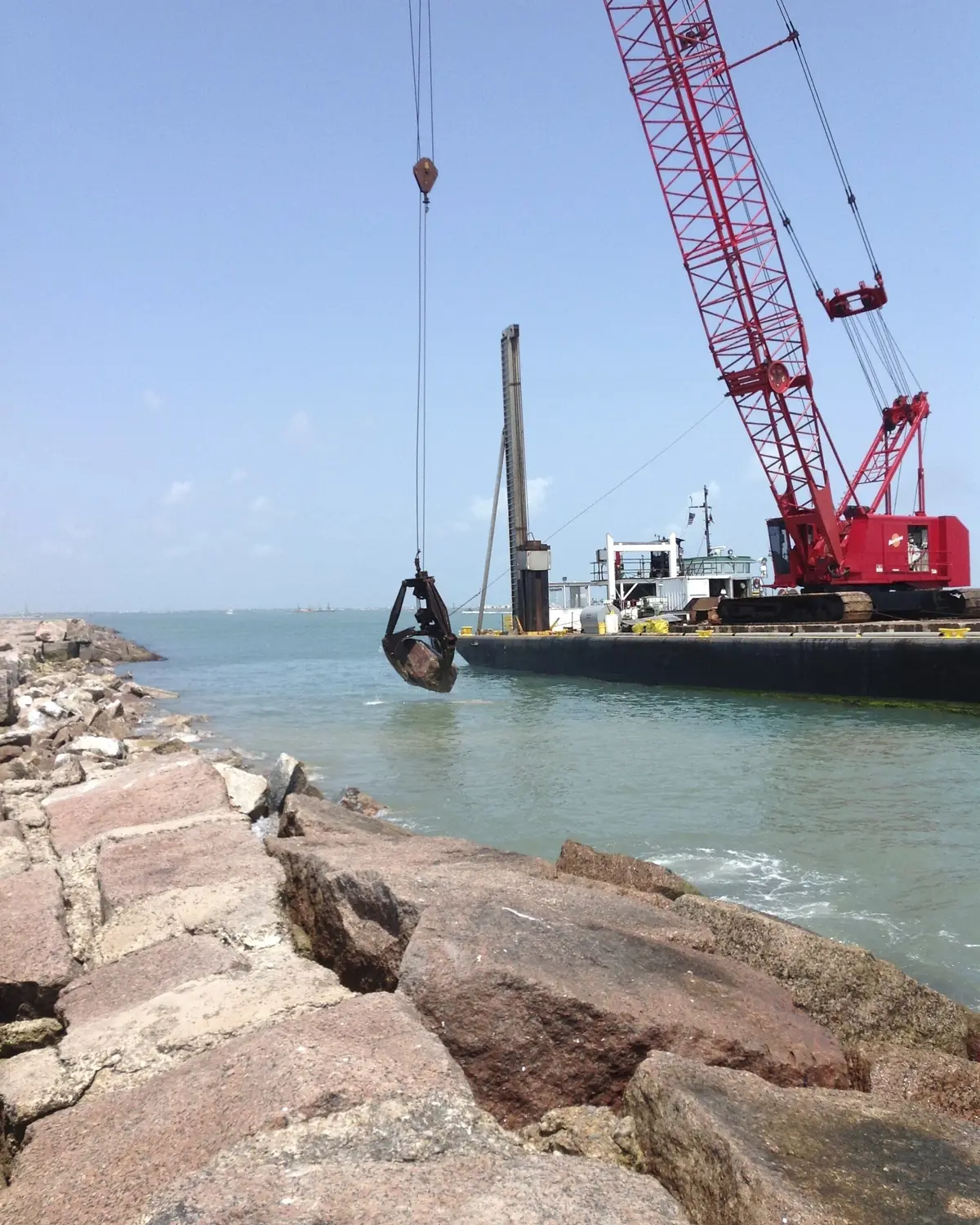
Crawlers work from barges and docks, as in the jetty repair shown here.
Steel on large builds
Erecting steel and heavy members on big projects.
Precast and heavy panels
Large elements where capacity and reach both matter.
Tandem and critical lifts
Heavy picks that need a written lift plan; see rigging services.
Planning a heavy lift
Federal crane rules for construction are in OSHA's 29 CFR 1926 Subpart CC. This is general guidance, not legal advice; the operator and your site safety lead decide how the lift runs.
- A written plan
- Heavy and critical lifts normally get a written lift plan covering the crane, the load, the rigging, the ground and the people. Many sites require one before the crane arrives.
- Ground bearing and mats
- The pad has to carry the crane and the load. Ask the operator what they need to know about the ground, and who supplies and places the mats.
- Power lines
- The work zone is checked for whether any part of the crane or load could come within 20 feet of a power line at full radius; wider clearances apply at higher voltages (29 CFR 1926.1408).
- Operator and signals
- Operators on construction lifts must be trained, certified or licensed (29 CFR 1926.1427), and a signal person is required when the load or landing is out of view (29 CFR 1926.1419).
What to have ready
- Load weight and what it is, with rigging.
- Reach and height: how far out and how high the load has to go.
- The ground: what the pad is made of and what it has to carry.
- Access for hauling: roads, gates and space to assemble the crane.
- Overhead lines and obstructions around the lift.
- Schedule: dates and how long the crane has to stay.
- Lift plan or drawings, if the site or an engineer has them.
Sketch your lift
Set the weight, the height and the distance from the crane roughly, then add them to your request in one tap.
A load of about 6,000 lb, set 40 ft up and 30 ft out from the crane.
This is a sketch, not a load chart. The operator sizes the crane from your numbers, the rigging and the ground it sets up on.
Crawler crane questions
Why choose a crawler over an all-terrain crane? Crawlers suit heavy picks, long jobs and work where the crane stays in one area for weeks. For lighter picks on firm ground, an all-terrain crane often does the job and arrives faster.
How long does it take to bring a crawler in? It depends on the size. Larger crawlers are hauled in pieces and assembled on site. Ask each operator how long mobilization takes and send your dates early.
Do crawler cranes need mats? Often. The operator tells you what they need to know about the ground and who provides the mats. Agree it in the quote.
Do I need a lift plan? Heavy and critical lifts normally do, and many sites require one. Ask the operator and the site what they expect.
Does a crawler come with an operator? Usually as an operated lift. Confirm it, and whether a rigger or signal person is included.
Can a crawler work near the port or on a barge? Crawler cranes do marine work. Describe the site and whether it's inside a gate in the request, and operators will say if they can take it.
Related crane services
Ask for a crawler crane
"Crawler crane" is already selected. Add the load, the reach, the ground and the schedule.
We pass your request to independent local operators who quote you directly.